
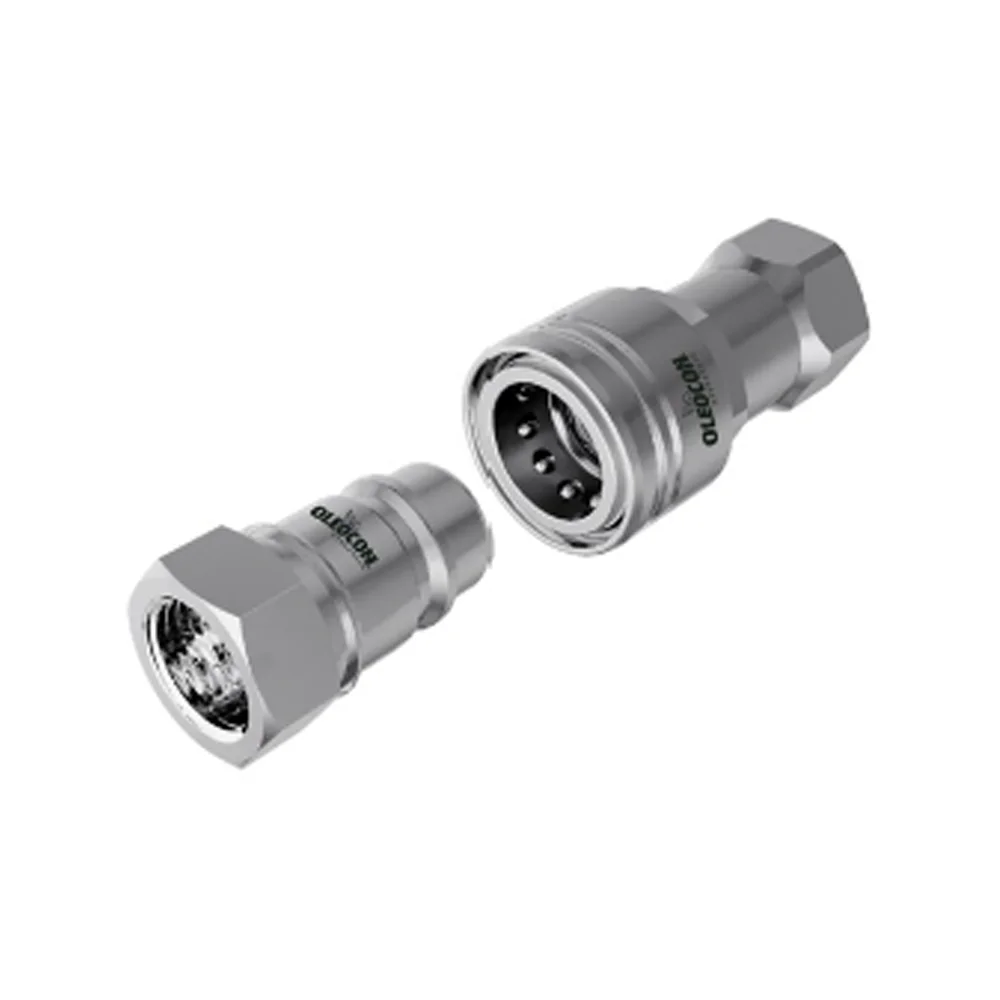
 Poppet type
6,3–50315bar
ISO 7241-A / B
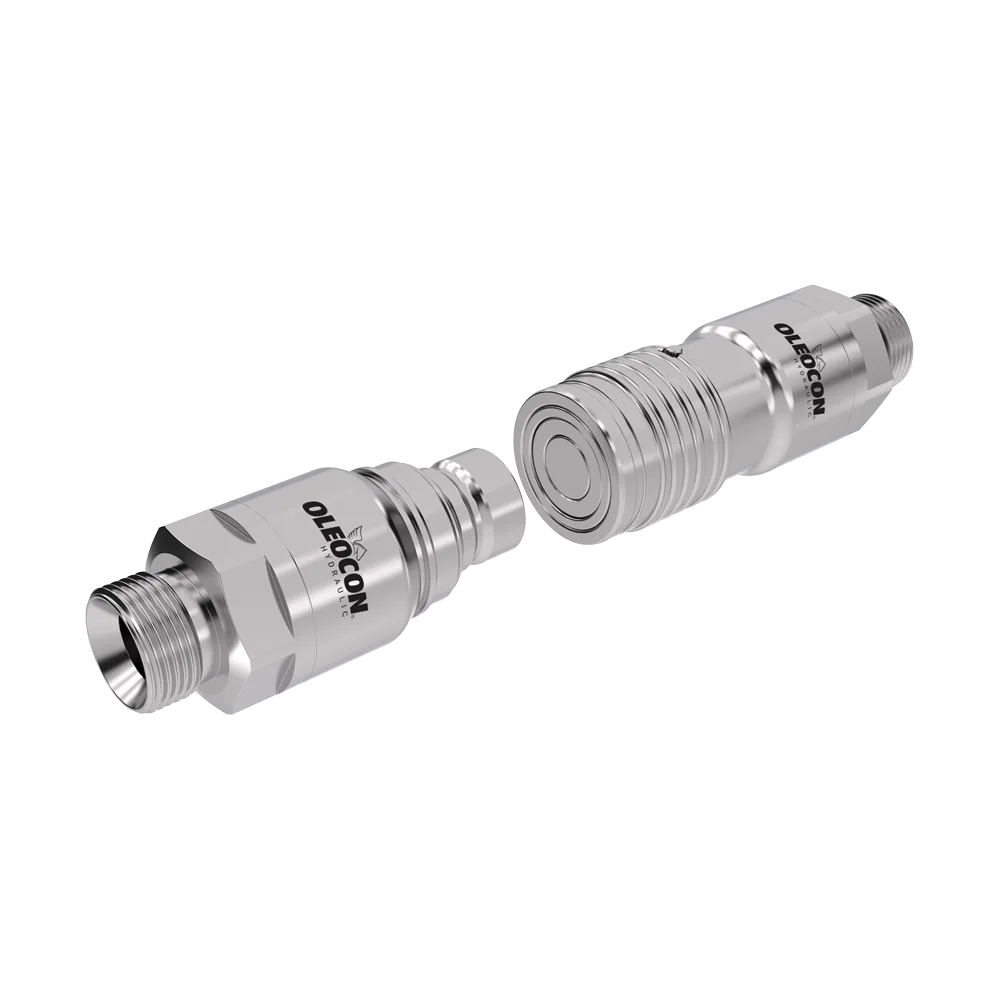
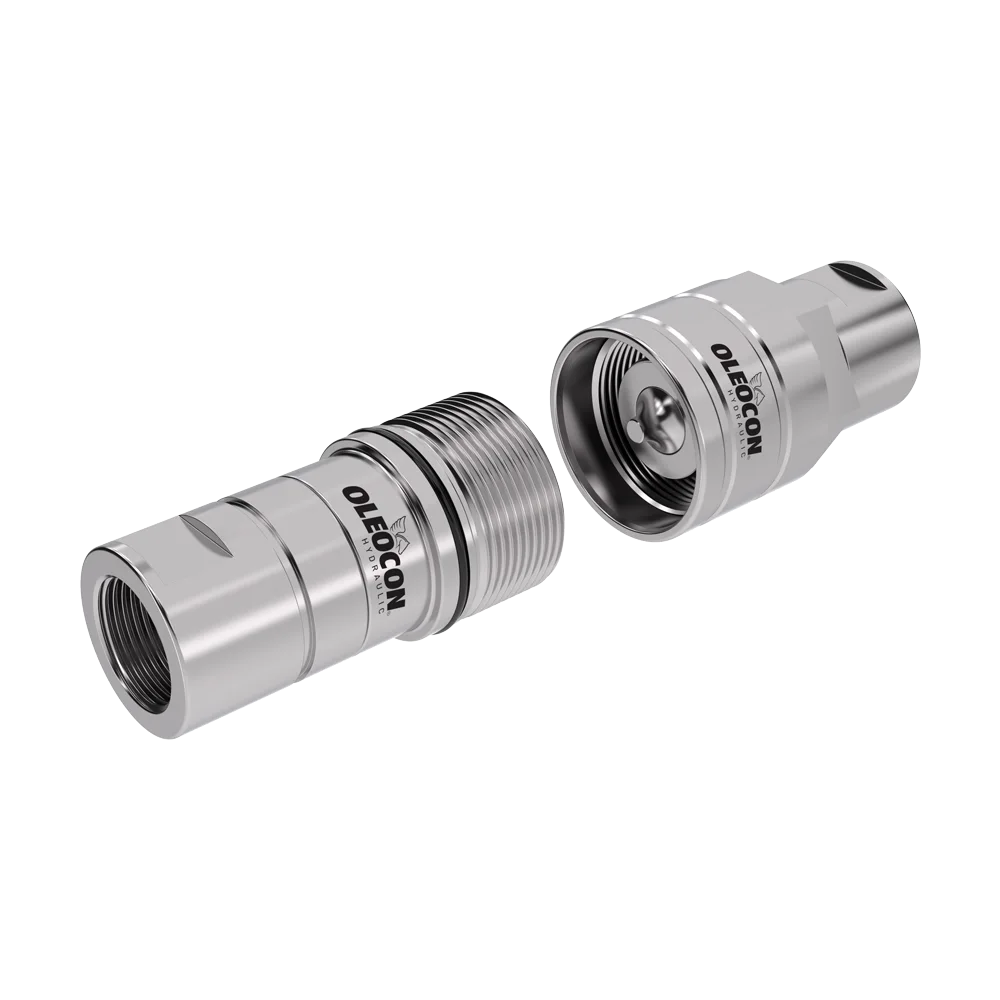
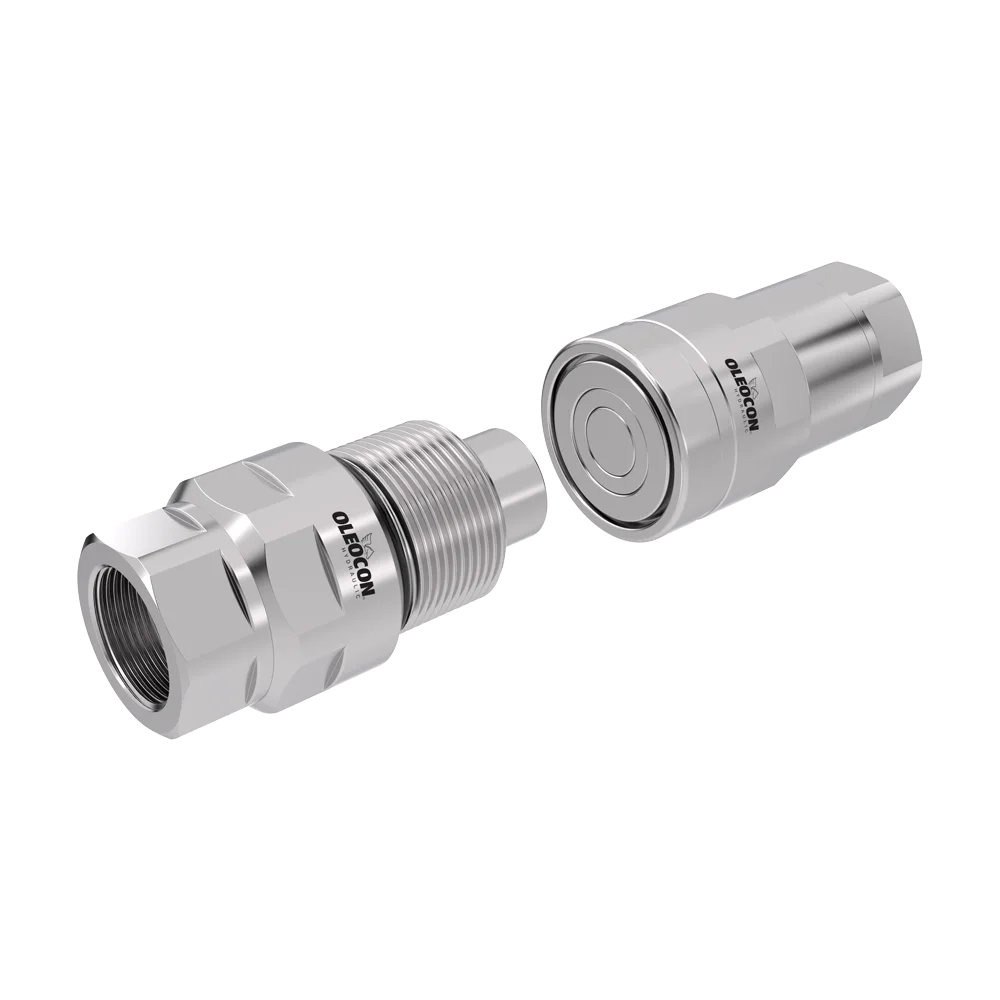
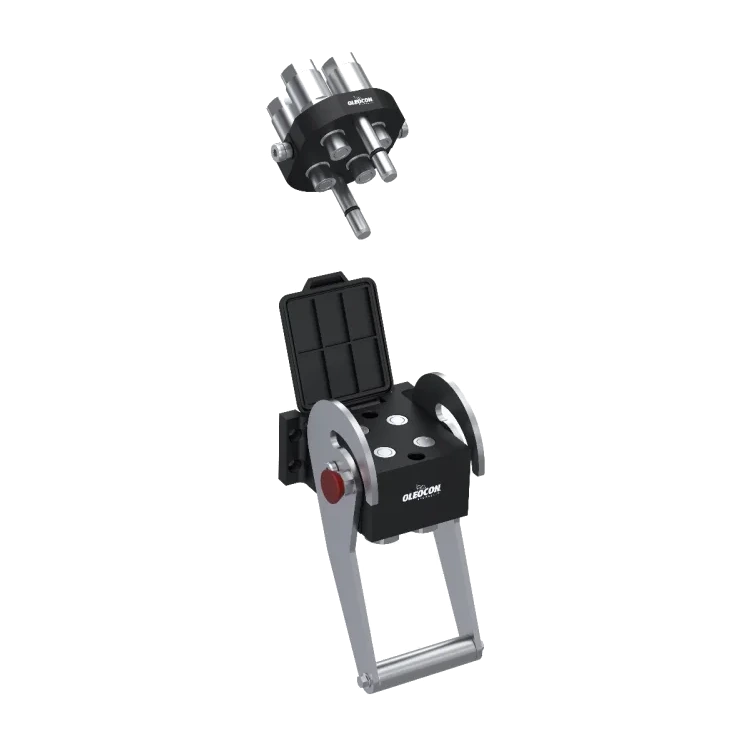
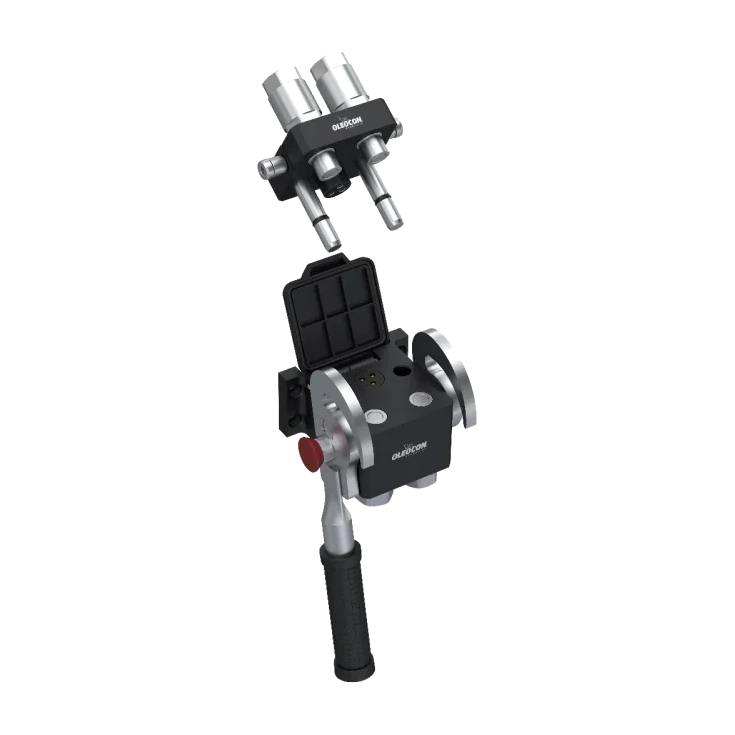
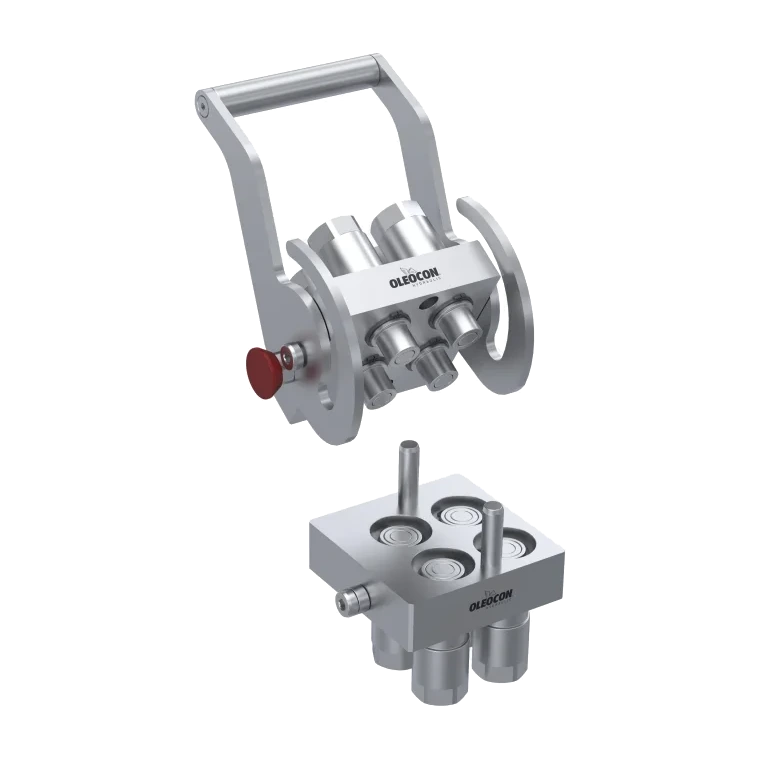
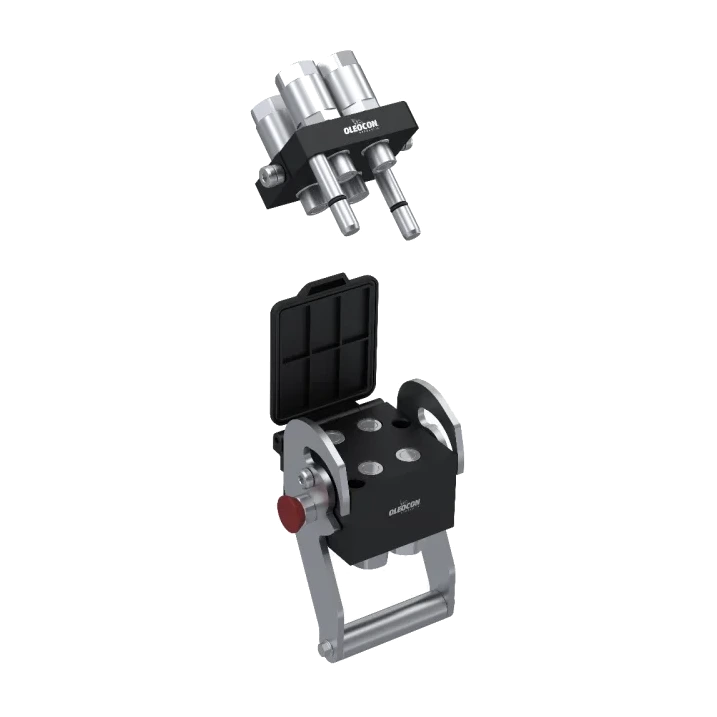
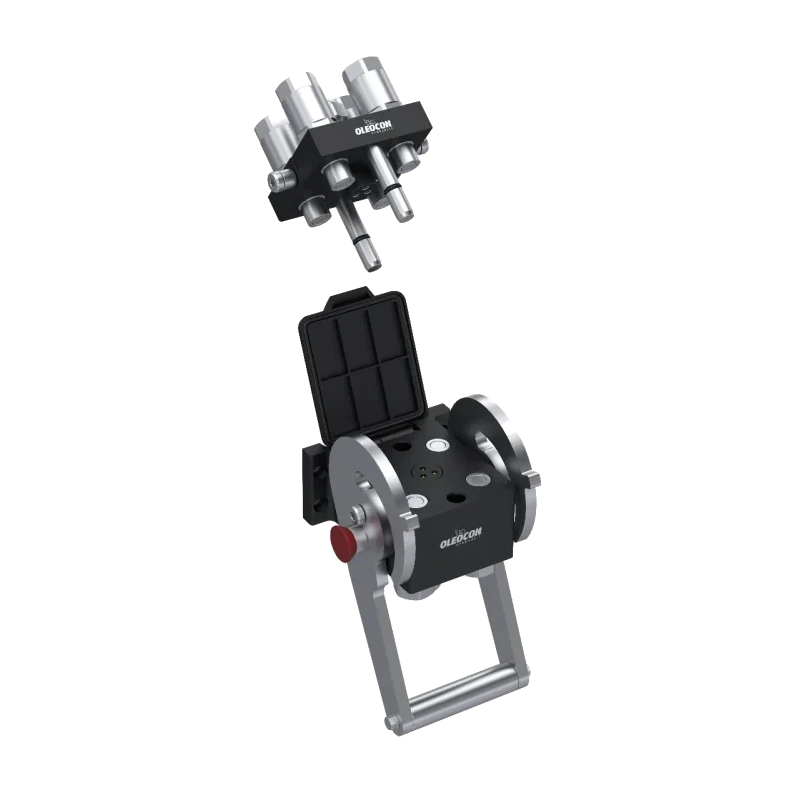
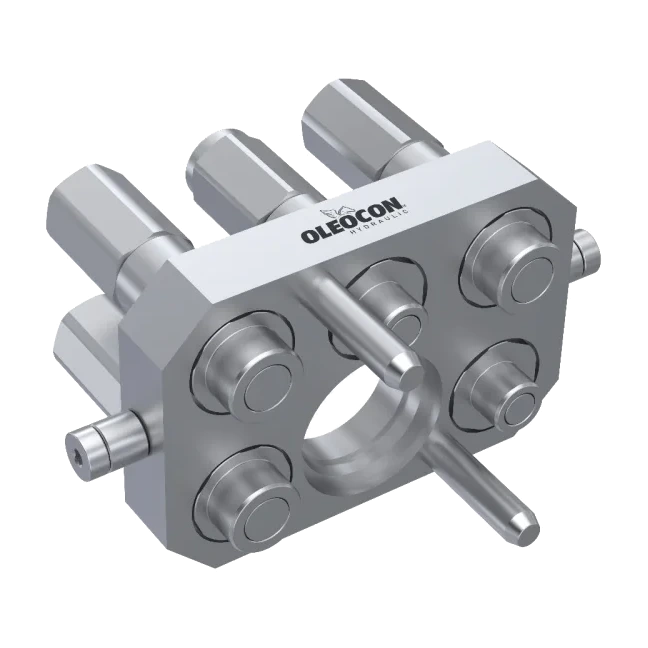
Multicouplings
T7EP
Multicoupling
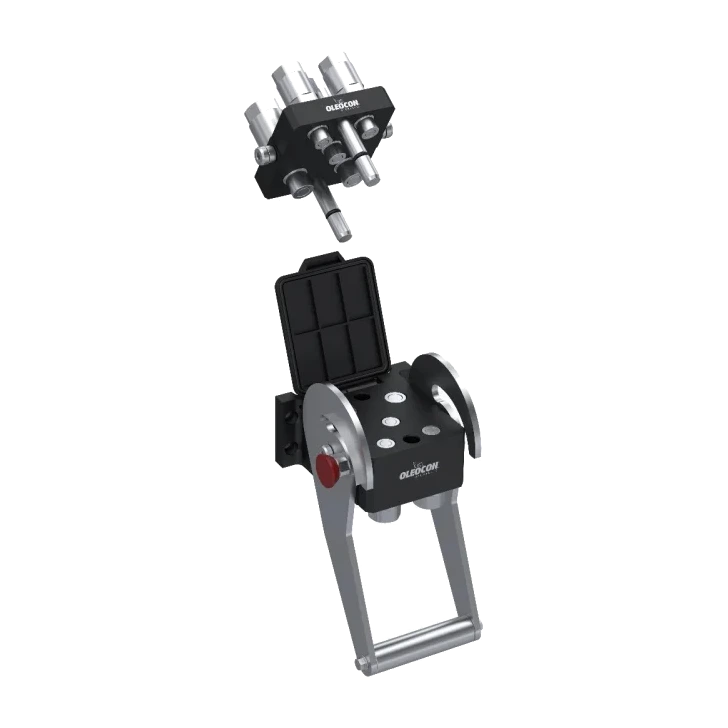
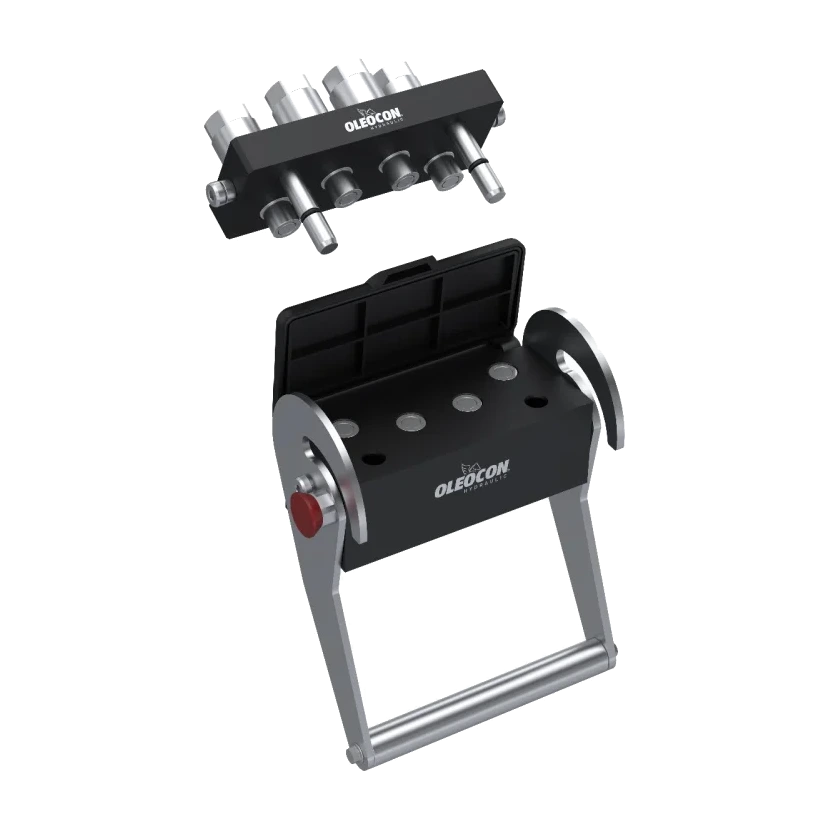
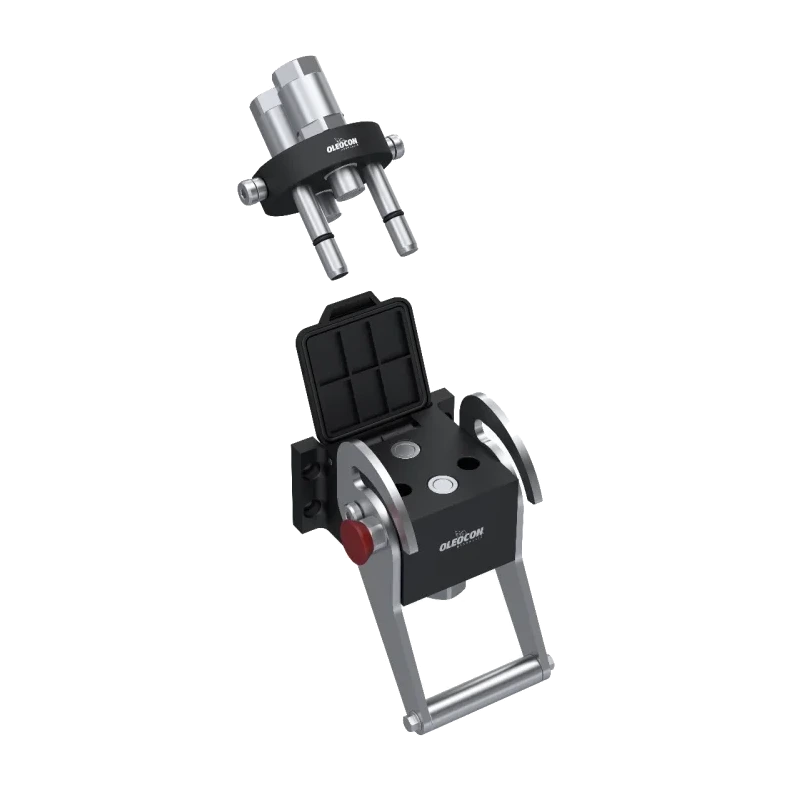
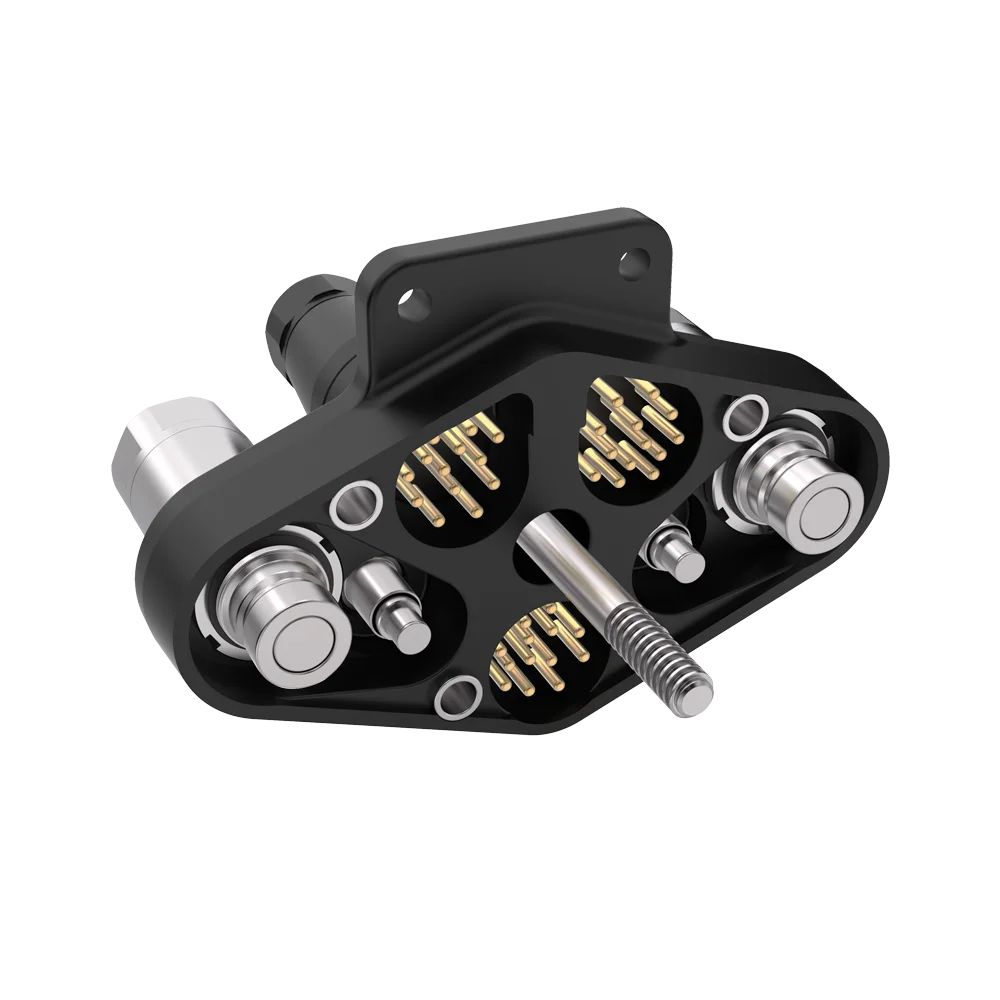
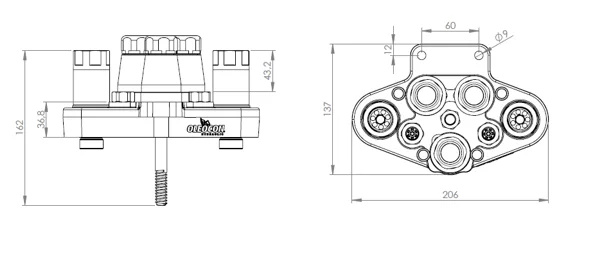
Multicoupling that connects hydraulic lines and electrical connections with a single lever movement on a 7-slot plate. It can be custom designed to customer requirements; flat-face couplings minimize the entry of foreign matter into the system.
T7EP
2Product code
Features and benefits
Technical specifications
- CompatibilityMarket standard
- Mechanical connectionInternal locking pins
- Disconnection typeBy turning the lever after the locking system is disabled
- Under residual pressureOn the male side only
- Thread optionsBSPP·UNF
- Valve typeFlat face
- Working pressureUp to 250 bar (3625 psi)
- Operating temperature−20 °C/+100 °C
Selection
How is the product code read?
T7EP–4–DAUR–M
Plate side
M M = moving (male) plate
Thread
DAUR Thread: DAUR = G1/4 + 7/8-14 UNF
Line layout
4 4/3 Line layout: 4 = 2 × 6.3 couplings + 2 × 12.5 couplings 4/3 = 2 × 6.3 couplings + 2 × 12.5 couplings + 3 × electrical connectors (13 pin)
Series
Multicoupling series (7-slot)
Instructions and warnings
Before use.
Correct use
For long life and reliable sealing
- Fix the female (stationary) plate to the body through the mounting holes.
- The male plate is the moving part.
- Before making hose or pipe connections to the quick couplings, make sure there is no pressure in the lines (cut off the energy in the system).
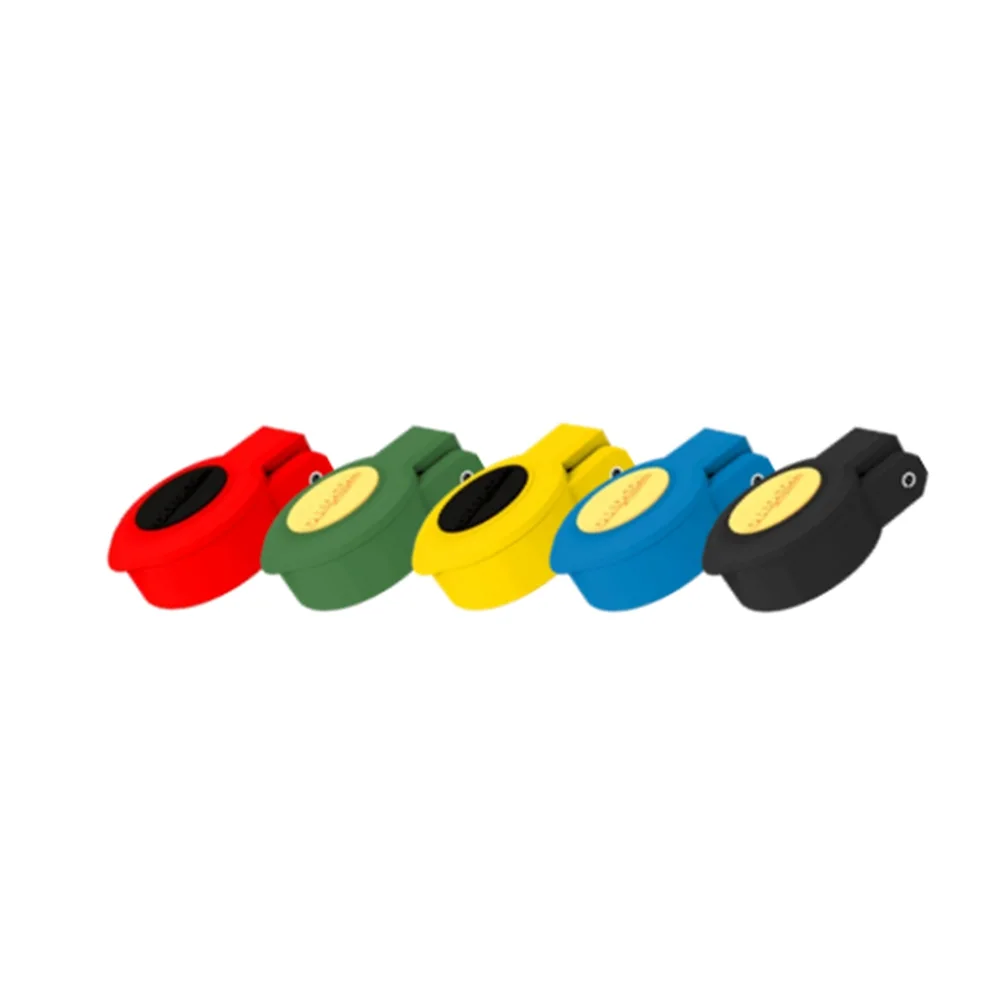
- Lift the plastic dust cap on the female (stationary) plate upward.
- Make sure the connection surfaces are clean.
- Place the male (moving) plate so that the centering pins line up with the holes in the female part.
- Secure the female (stationary) plate by turning the locking lever clockwise.
- Make sure the locking lever is seated in its slot.
- During disconnection, safely release all pressure inside the system.
- Open the locking mechanism and turn the locking lever counterclockwise.
- Remove the male (moving) plate by pulling it out slowly.
- Fit the dust caps on the female (stationary) and male (moving) plates to protect them from contamination.
Warnings
Read before installation and use
- !In applications where a Multicoupling is used, because of the high pressure, using the device properly prevents harm to machines and people.
- !It is recommended to clean the surfaces of the fixed and moving parts and the centering pins of the Multicoupling before each connection. If this cleaning is not done, dirt, dust and foreign matter will damage the seals inside the Multicoupling. This can cause leakage.
- !During connection, make sure the residual pressure remains on the moving side of the Multicoupling. Release the pressure on the fixed side.
- !Never try to connect or disconnect under dynamic pressure, “while the sample pump is running”.
- !Make sure the system pressure is below the permitted working pressure.
- !Take care to use flexible hoses to connect the multicoupling parts. Avoid installations on the multicoupling that could transmit excessive side load and vibration.
- !Do not disconnect or connect when the oil temperature in the system reaches 80° (176F).
- !Make sure the oil in the system is clean before connecting hydraulic quick couplings to the system.
- !Make sure that all filters and cooling systems are working correctly.
- !Oleocon products used in systems that do not meet these conditions are outside the scope of the warranty.
Applications
Where is the T7EP used?
Downloads
Catalogs, Technical Data and CAD.
You may also like
Related series
Can't find the size or connection you need in the list?
Send us the code or a technical drawing; we will get back to you with a suitable product and price.